
Introduction
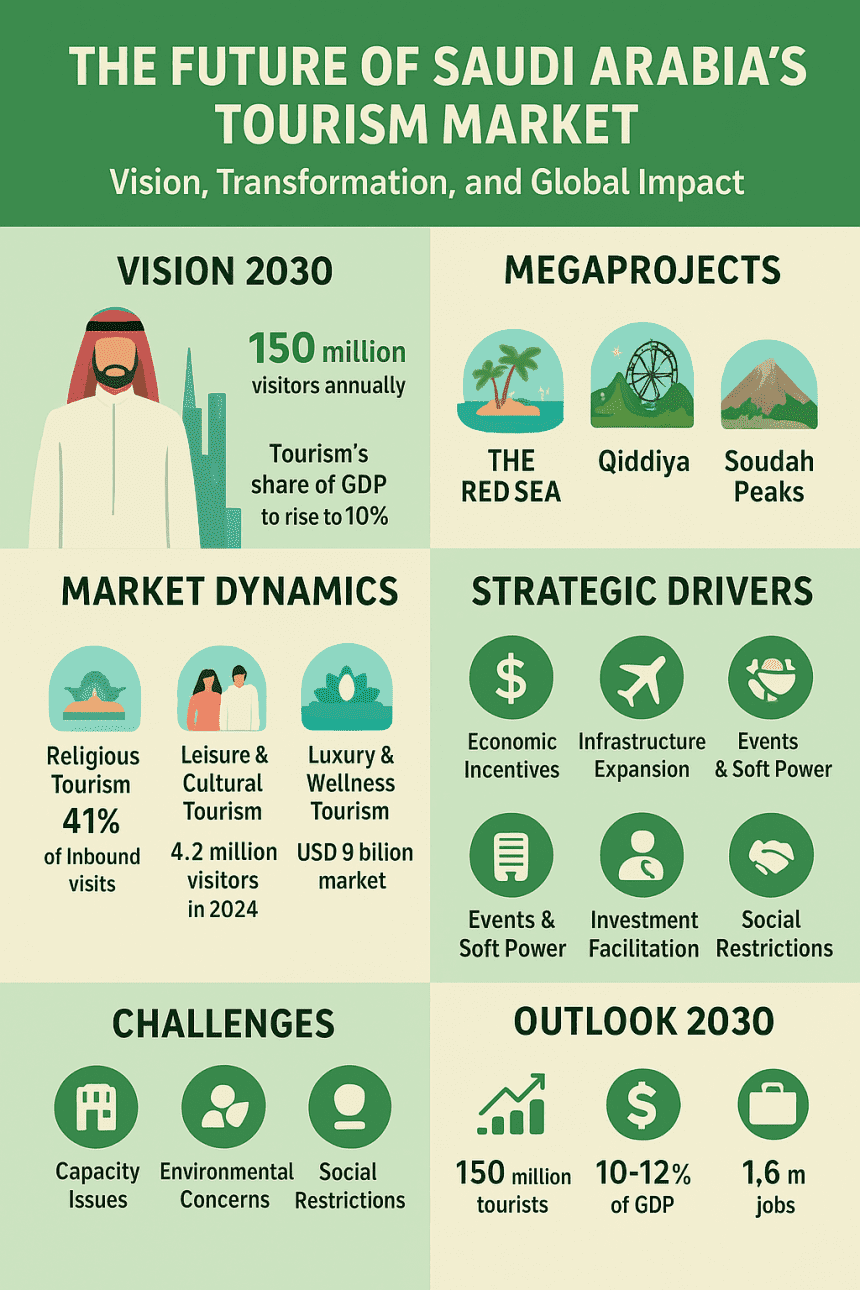
Saudi Arabia, historically known for its religious tourism centered around Mecca and Medina, is undergoing a profound transformation. With the launch of Vision 2030, the Kingdom has set ambitious goals to diversify its economy, reduce dependence on oil, and position itself as a global tourism powerhouse. This essay explores the future of Saudi Arabia’s tourism market, examining its strategic initiatives, emerging trends, challenges, and the broader implications for the global travel industry.
1. Vision 2030: A Blueprint for Tourism Growth
Saudi Arabia’s Vision 2030 is the cornerstone of its tourism strategy. It aims to:
- Attract 150 million visitors annually by 2030, up from 100 million in 2023
- Create 1 million tourism-related jobs
- Increase tourism’s contribution to GDP to 10%
Key pillars include:
- Cultural revitalization: Promoting Saudi heritage and arts
- Infrastructure development: Building airports, hotels, and entertainment hubs
- Regulatory reforms: Simplifying visa processes and encouraging foreign investment
2. Mega Projects Reshaping the Landscape
Saudi Arabia is investing billions in mega tourism projects that blend luxury, sustainability, and innovation:
| Project | Description | Estimated Investment |
|---|---|---|
| NEOM | Futuristic city with eco-tourism, smart mobility, and zero-carbon footprint | $500 billion |
| The Red Sea Project | Luxury resorts across 90 islands with coral reef preservation | $10 billion+ |
| Qiddiya | Entertainment city with theme parks, sports arenas, and cultural venues | $8 billion |
| AlUla | UNESCO heritage site with archaeological tourism and desert experiences | $15 billion |
These projects are designed to attract high-value international tourists, while preserving natural and cultural assets.
3. Expanding Market Segments
Saudi Arabia is diversifying its tourism offerings to appeal to a broader audience:
Religious Tourism
- Remains a core segment with millions of pilgrims visiting Mecca and Medina annually
- Enhanced infrastructure and digital services improve the Hajj and Umrah experience
Coastal & Eco-Tourism
- The Saudi Red Sea Authority (SRSA) is developing sustainable coastal tourism with new regulations and marine protection frameworks
Cultural & Heritage Tourism
- Restoration of historical sites like Diriyah and Jeddah’s old town
- Promotion of festivals, museums, and local crafts
Adventure & Wellness Tourism
- Hiking in the Asir Mountains, desert safaris, and wellness retreats
- Focus on nature-based experiences and mental rejuvenation
4. Infrastructure and Accessibility
- Airport upgrades: King Khalid International and new terminals in NEOM
- Hotel development: Thousands of new rooms across luxury and budget segments
- Transport networks: High-speed rail and smart mobility solutions
The e-visa system and visa-on-arrival options have made entry easier for tourists from over 50 countries.
5. Technology and Innovation
- Smart apps for booking, navigation, and cultural education
- AI-powered personalization for travel itineraries
- Urban air mobility (e.g., air taxis and drones) to revolutionize transport in NEOM and AlUla
The TOURISE platform, launched in 2025, brings together global experts to shape sustainable and tech-driven tourism.
6. Human Capital and Workforce Development
- Programs to train future tourism leaders
- Hospitality schools and vocational institutes
- Empowerment of women and youth in tourism roles
By 2030, tourism is expected to become the second-largest employer in the Kingdom.
7. Sustainability and Environmental Stewardship
- Renewable energy in resorts (e.g., solar-powered Red Sea Project)
- Marine conservation and coral reef protection
- Reforestation and eco-tourism in AlUla
These efforts align with global climate goals and ensure long-term viability of tourism assets.
8. Global Positioning and Partnerships
- Hosted the World Economic Forum 2025 with a focus on tourism innovation
- Strategic partnerships with UN Tourism and international investors
- Fastest-growing tourism destination in the G20 in 2023
The Kingdom’s success is built on collaboration, innovation, and resilience.
9. Challenges and Risks
- Balancing modernization with cultural preservation
- Managing geopolitical perceptions and global media narratives
- Ensuring infrastructure keeps pace with demand
- Addressing climate risks in desert and coastal regions
Proactive planning and transparent governance will be key to overcoming these hurdles.
10. Future Outlook
- Welcome 150 million tourists annually
- Become a top 5 global tourism destination
- Lead in sustainable and inclusive tourism development
With its bold vision, strategic investments, and cultural richness, Saudi Arabia is redefining what tourism means in the 21st century.
Conclusion
The future of Saudi Arabia’s tourism market is not just about numbers—it’s about transformation. From ancient ruins to futuristic cities, from sacred pilgrimages to luxury escapes, the Kingdom is crafting a tourism narrative that is inclusive, innovative, and inspiring. As it continues to open its doors to the world, Saudi Arabia invites travelers to not only witness its evolution but to be part of it.
This article on “Saudi Arabia’s Tourism” is published and distributed by Arab Newswire™, part of GroupWeb Media Network. To reach a target audience with press release distribution in Saudi Arabia, GCC, Middle East and North Africa (MENA) or the Arab world, contact us at: 832-716-2363 or Telegram: @groupwebmedia